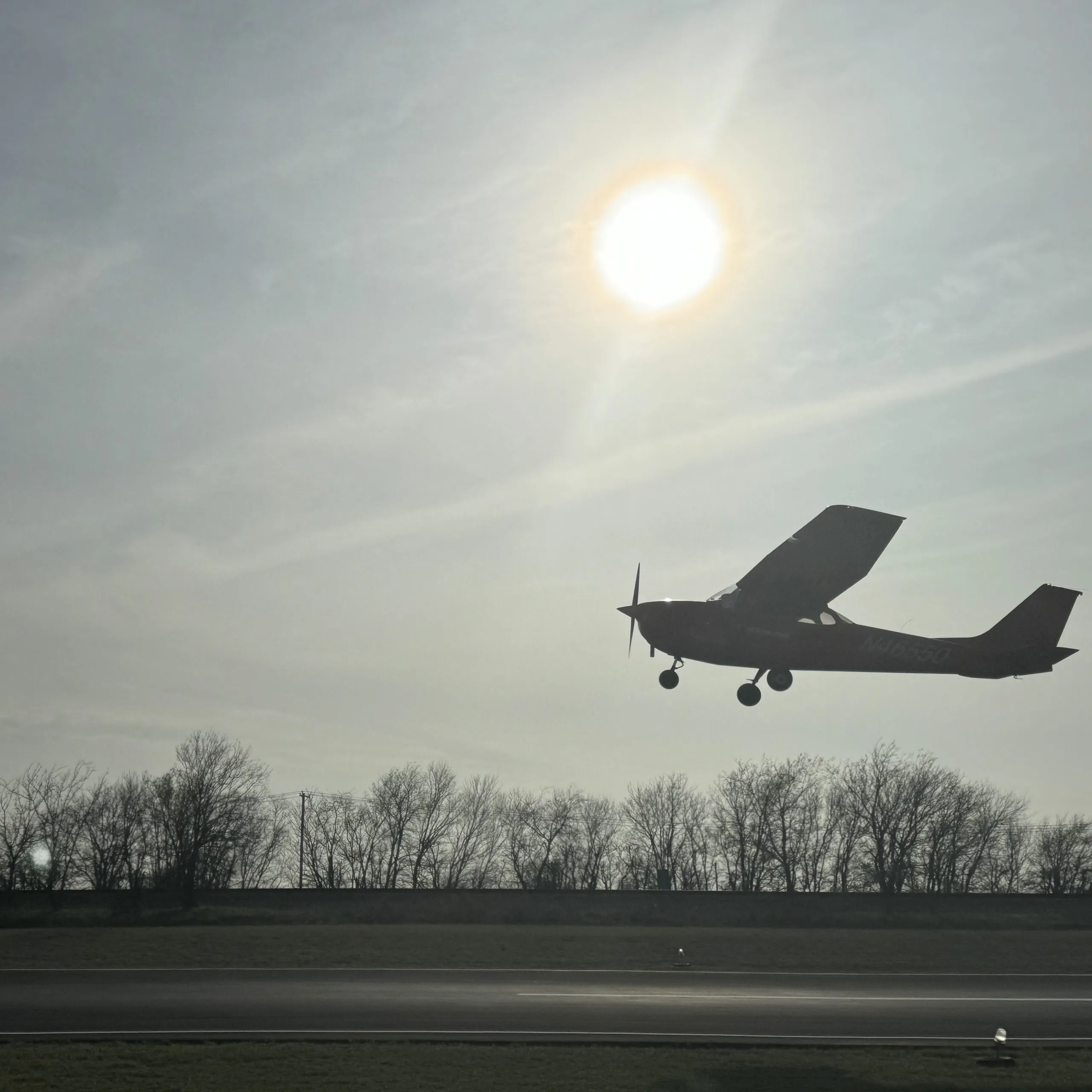
Flying in the Texas Heat: Understanding Density Altitude and Why Leaning the Mixture Matters
When most pilots think about challenging flying conditions, they picture strong winds, thunderstorms, or icing. But during a Texas summer, one of the biggest threats to aircraft performance is something you can't see at all—density altitude.
At Pilot Rise, we spend a great deal of time teaching students not only how to fly an airplane, but why it performs the way it does. Understanding density altitude and proper mixture management is essential for every pilot, especially when flying in Texas where temperatures routinely exceed 100°F.
What Is Density Altitude?
Density altitude is simply pressure altitude corrected for non-standard temperature. In practical terms, it is the altitude at which the airplane "thinks" it is flying.
Even if you're taking off from an airport only a few hundred feet above sea level, extremely hot temperatures can make the airplane perform as though it were departing from several thousand feet higher.
For example:
- Airport Elevation: 700 feet MSL
- Outside Air Temperature: 105°F
- Density Altitude: Approximately 3,500–4,000 feet
Although your altimeter still reads around 700 feet, your aircraft, engine, and propeller are all performing as if they were operating thousands of feet higher.
Why Does Hot Air Affect Performance?
Hot air is less dense than cool air.
Less dense air means there are fewer oxygen molecules available for the engine, less air flowing over the wings, and less air for the propeller to "grab."
The result is reduced performance in three major areas.
1. Reduced Engine Power
Aircraft engines require oxygen to produce power.
As density altitude increases, less oxygen enters the cylinders with each intake stroke. Without proper mixture adjustment, the engine can become excessively rich, reducing horsepower even further.
2. Reduced Propeller Efficiency
A propeller is essentially a rotating wing.
With less dense air, the propeller cannot produce as much thrust. Even at full throttle, acceleration will be noticeably slower.
3. Reduced Wing Lift
Wings create lift by moving through the air.
When the air is less dense, the wing produces less lift at a given airspeed. To generate the same amount of lift, the aircraft must accelerate to a higher true airspeed.
This results in:
- Longer takeoff rolls
- Reduced climb performance
- Higher true airspeeds during departure
- Longer landing distances
Why We Teach Mixture Leaning During Taxi
One question we hear frequently from new students is:
"Why are we leaning the mixture before takeoff? I thought we wanted full rich."
The answer depends on where you are flying and the day's conditions.
In very hot weather, especially in Texas, the engine often receives more fuel than it can efficiently burn if the mixture remains full rich.
That extra fuel does not create more power.
Instead, it can:
- Reduce horsepower
- Increase spark plug fouling
- Cause rough engine operation
- Increase fuel consumption
Leaning the mixture during taxi and, when appropriate according to the aircraft's operating procedures and Pilot's Operating Handbook (POH), for takeoff at higher density altitudes helps restore the proper fuel-to-air ratio, allowing the engine to produce more efficient power.
Always follow the procedures in the aircraft's POH and your instructor's guidance. Not every aircraft or operating condition calls for the same mixture technique.
Texas Summers Demand Extra Planning
Texas offers excellent flying weather for much of the year, but summer introduces unique performance challenges.
A day with:
- 102°F temperature
- High humidity
- Four people onboard
- Full fuel
- A short runway
can produce dramatically different takeoff performance than the same flight on a cool winter morning.
Every pilot should calculate:
- Density altitude
- Takeoff distance
- Climb performance
- Weight and balance
before every flight—not just for checkrides.
Common Student Pilot Mistakes
During summer training, instructors often see students:
- Assuming field elevation equals aircraft performance.
- Forgetting to calculate density altitude.
- Leaving the mixture excessively rich when operating under conditions where leaning is appropriate.
- Underestimating the increase in takeoff distance.
- Expecting normal climb rates despite high temperatures.
These mistakes are easy to make until you've experienced just how much performance changes in the Texas heat.
Real-World Example
Imagine two identical Cessna 172s departing the same runway.
The first departs on a January morning at 40°F.
The second departs in August at 103°F.
The airplanes weigh the same, have the same pilot, and depart from the same airport.
Yet the August airplane will likely experience:
- A much longer takeoff roll
- A noticeably slower climb
- Higher engine temperatures
- Reduced engine power if the mixture is not managed correctly
- Less overall performance throughout the departure
Nothing about the airplane changed.
Only the air did.
The Pilot Rise Difference
At Pilot Rise, we don't just teach students how to pass a checkride—we teach them how to become safe, knowledgeable pilots.
Understanding density altitude is more than memorizing a definition for an FAA knowledge test. It's about recognizing when your airplane may not perform the way you expect and making sound decisions before you advance the throttle.
Whether you're preparing for your Private Pilot Certificate or building experience toward advanced ratings, learning to respect density altitude is a skill that will benefit you throughout your flying career.
Especially in Texas.
Final Thoughts
The Texas heat is more than an inconvenience—it directly affects aircraft performance.
By understanding density altitude, calculating performance before every flight, and using proper mixture procedures in accordance with the POH and your instructor's guidance, pilots can significantly improve both safety and aircraft performance.
The best pilots don't simply react to conditions.
They anticipate them.
At Pilot Rise, that's exactly how we train.
Ready to start your aviation journey? Whether you're interested in earning your Private Pilot Certificate or simply experiencing your first flight, our instructors are here to help you become a knowledgeable, confident, and safety-focused pilot. Contact Pilot Rise today to schedule your first lesson or Discovery Flight.