Training beyond FAA minimums at Pilot Rise Flight School in DFW

REAL-WORLD FLIGHT TRAINING

Training Beyond FAA Minimums: 17 Pilot Rise Enhancements

Passing a checkride matters, but being ready for the flight after it matters more. Pilot Rise uses training beyond FAA minimums to integrate 17 structured experiences that build judgment, aircraft control, navigation, and decision-making in a DFW flight school syllabus.

Beyond FAA MinimumsPersonalized TrainingFlexible SchedulingFinancing Available
Beyond FAA MinimumsPersonalized Training
Flexible SchedulingFinancing Available

Why training beyond FAA minimums matters

The FAA's regulations and Airman Certification Standards form the foundation of each certificate and rating. A course can still be taught narrowly around the required experience and practical-test tasks, or it can use those standards as the beginning of a broader training system.

Pilot Rise deliberately uses training beyond FAA minimums to add real-world scenarios and experiences that help students understand how individual skills work together on actual flights. The goal is not to make training dramatic or unnecessarily complicated. The goal is to build pilots who can recognize a changing situation, make a sound decision, and use the airplane confidently within safe limits.

Structured, not random

Each enhancement has a training purpose and is introduced when it supports the student's current lesson, progress, and certificate path.

Scenario-based, never reckless

Training remains within applicable regulations, aircraft limitations, Pilot Rise policies, airport and weather conditions, and instructor judgment. Some subjects are safer and more effective in a simulator, at altitude, through observation, or in a detailed briefing.

Integrated, not a separate upsell

The enhancements are part of how Pilot Rise teaches, not a separate package added to the price. Normal aircraft and instructor charges apply, and total training time varies with the student's consistency, preparation, proficiency, course, and individual needs.

Training Beyond FAA Minimums

How Pilot Rise applies training beyond FAA minimums

Open any item to compare a common minimum-focused approach with the Pilot Rise approach and see why the difference matters.

Airport-to-Airport and Mission Integration

Combine individual maneuvers and procedures into realistic trips instead of practicing every skill in isolation near the home airport.Pilot RisePilot Rise combines syllabus objectives into realistic airport-to-airport missions.Common minimum-focused approachLessons can become a sequence of separate maneuvers in the practice area followed by a return to the same airport and runway environment.More detailsClose details
Common minimum-focused approach
Lessons can become a sequence of separate maneuvers in the practice area followed by a return to the same airport and runway environment.
How Pilot Rise expands it
Pilot Rise combines syllabus objectives into realistic airport-to-airport missions. A lesson may include planning, departure, airspace, navigation, a simulated passenger or schedule consideration, a diversion, a different airport, changing runway conditions, and an arrival that still develops the assigned flight skills.
Why it matters
Real flights require pilots to manage several demands at once. Mission integration teaches students to connect aircraft control, communication, planning, weather, and judgment into one organized flight.

Power-Off 180s

Practice planning and controlling a precision approach using only the airplane energy already available after the power is reduced to idle.Pilot RiseAt the appropriate stage of training and at a suitable airport, the instructor introduces power-off 180 approaches with the throttle at idle and the engine still running.Common minimum-focused approachPrivate pilot training normally includes simulated engine failures, but it may not repeatedly develop a precision power-off approach to a selected touchdown area.More detailsClose details
Common minimum-focused approach
Private pilot training normally includes simulated engine failures, but it may not repeatedly develop a precision power-off approach to a selected touchdown area.
How Pilot Rise expands it
At the appropriate stage of training and at a suitable airport, the instructor introduces power-off 180 approaches with the throttle at idle and the engine still running. Students learn to judge wind, glidepath, turn radius, configuration, runway geometry, and touchdown control without depending on added power to correct poor energy planning.
Why it matters
Power-off 180s sharpen judgment and energy management. They also help students see earlier whether an approach is high, low, fast, slow, or no longer salvageable.
Important limit
The instructor controls when and where the maneuver is appropriate and may terminate it whenever safety margins are reduced.

Enhanced Night Maneuvers and Night Landing Practice

Use suitable night lessons to build more than the minimum exposure to darkness, lighting, visual illusions, approaches, and landings.Pilot RisePilot Rise uses appropriate night lessons to revisit selected maneuvers, airport lighting, runway identification, visual illusions, stabilized approaches, go-arounds, navigation, and emergency decision-making.Common minimum-focused approachA minimum-focused course may complete the required night flight and landings in a small number of lessons, with limited time to revisit the differences night creates.More detailsClose details
Common minimum-focused approach
A minimum-focused course may complete the required night flight and landings in a small number of lessons, with limited time to revisit the differences night creates.
How Pilot Rise expands it
Pilot Rise uses appropriate night lessons to revisit selected maneuvers, airport lighting, runway identification, visual illusions, stabilized approaches, go-arounds, navigation, and emergency decision-making. Students practice a broader mix of landings and airport environments when conditions and proficiency permit.
Why it matters
Night changes depth perception, workload, available landing options, and the way an airport looks. Deliberate exposure makes those differences more familiar before a student flies independently at night.
Important limit
All training remains within aircraft, airport, weather, instructor, and Pilot Rise operating limits.

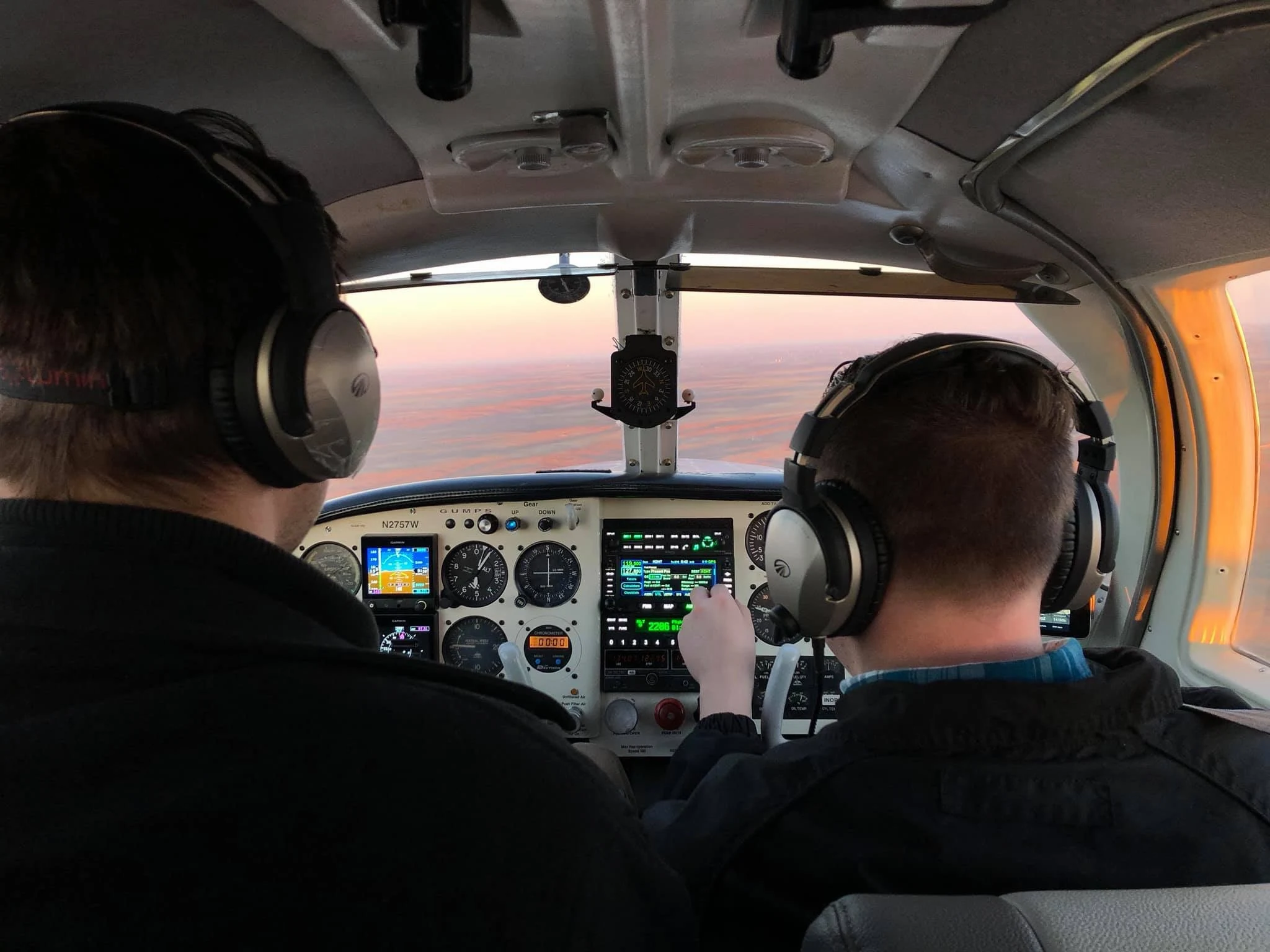
Observation Flights (Backseating)

Watch another lesson from the rear seat so you can study decisions, corrections, and the complete flight without handling every cockpit task yourself.Pilot RiseWhen the aircraft, weight and balance, lesson, schedule, instructor, and participating student allow, a student may observe another training flight from the rear seat.Common minimum-focused approachMost training is experienced only from the student seat, where attention is divided among flying, radios, checklists, navigation, and instruction.More detailsClose details
Common minimum-focused approach
Most training is experienced only from the student seat, where attention is divided among flying, radios, checklists, navigation, and instruction.
How Pilot Rise expands it
When the aircraft, weight and balance, lesson, schedule, instructor, and participating student allow, a student may observe another training flight from the rear seat. The observer receives a purpose before the flight and a short debrief afterward, so backseating becomes guided learning rather than a ride-along.
Why it matters
Observation makes it easier to recognize common errors, hear coaching in context, and understand how a complete lesson develops. It is not represented as loggable flight time.
Important limit
Available only when seating, weight and balance, aircraft limitations, consent, and school policy permit.

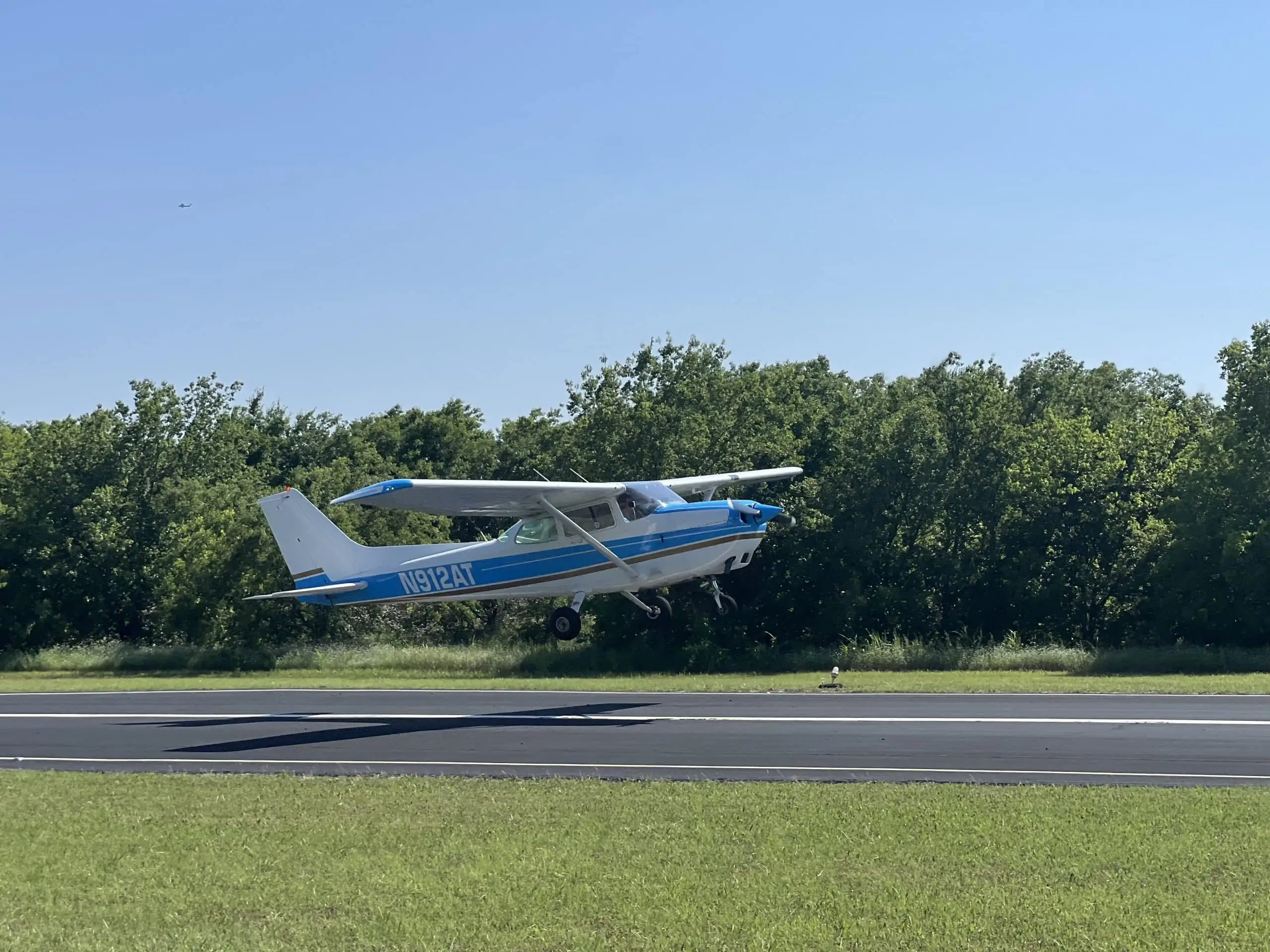
Real Grass Runway Landings

Apply soft-field planning and control technique on an actual suitable turf runway instead of experiencing it only as a simulation on pavement.Pilot RiseWhen aircraft authorization, airport condition, weather, performance, insurance, and instructor judgment allow, students operate at a suitable grass runway.Common minimum-focused approachSoft-field takeoffs and landings are commonly simulated on a paved runway, which cannot fully reproduce surface condition, rolling resistance, propeller-clearance concerns, and braking limitations.More detailsClose details
Common minimum-focused approach
Soft-field takeoffs and landings are commonly simulated on a paved runway, which cannot fully reproduce surface condition, rolling resistance, propeller-clearance concerns, and braking limitations.
How Pilot Rise expands it
When aircraft authorization, airport condition, weather, performance, insurance, and instructor judgment allow, students operate at a suitable grass runway. The lesson includes checking runway condition and length, performance planning, contamination and obstacle concerns, control positioning, power use, propeller clearance, braking, and the option to decline the landing.
Why it matters
Actual turf makes the reasons behind soft-field technique easier to understand and reinforces that runway surface is a performance and risk-management decision, not merely a checkride maneuver.
Important limit
Grass operations are conditional. Some Pilot Rise aircraft are not approved for grass-runway operations, and any grass-runway operation is authorized only with a Pilot Rise instructor. Grass operations are never guaranteed merely to complete the list.

Engine-Out Landings at Real Airports, Day and Night

Carry selected simulated engine-out scenarios through the complete approach and landing at a suitable runway instead of always restoring power early.Pilot RiseWhen runway length, traffic, weather, lighting, student readiness, and instructor judgment support it, Pilot Rise may continue a simulated engine-out scenario through landing with the throttle at idle and the engine operating.Common minimum-focused approachMany simulated engine failures end with a planned recovery at altitude, so the student may receive less experience with the final approach, runway alignment, flare, and touchdown portions of the scenario.More detailsClose details
Common minimum-focused approach
Many simulated engine failures end with a planned recovery at altitude, so the student may receive less experience with the final approach, runway alignment, flare, and touchdown portions of the scenario.
How Pilot Rise expands it
When runway length, traffic, weather, lighting, student readiness, and instructor judgment support it, Pilot Rise may continue a simulated engine-out scenario through landing with the throttle at idle and the engine operating. The lesson emphasizes immediate actions, runway selection, glide management, checklists, communication, stabilized approach criteria, and when to discontinue the exercise.
Why it matters
The final phase is where energy planning becomes visible. Completing an appropriate scenario helps students connect emergency procedures to the actual demands of reaching and landing on a runway.
Important limit
No engine is intentionally shut down. Night demonstrations use conservative conditions and a suitable airport, and they are never guaranteed.

Additional System Failure Practice

Practice a broader set of abnormal situations involving landing lights, flaps, brakes, trim, and trim-related stall awareness.Pilot RisePilot Rise uses the airplane, an approved training device, and instructor-created scenarios as appropriate to practice landing-light loss, flap anomalies or no-flap landings, brake concerns, abnormal or runaway-trim recognition, and trim-related stall awareness.Common minimum-focused approachLess common system failures are often limited to ground discussion or brief exposure because some cannot be safely or practically reproduced in an airplane.More detailsClose details
Common minimum-focused approach
Less common system failures are often limited to ground discussion or brief exposure because some cannot be safely or practically reproduced in an airplane.
How Pilot Rise expands it
Pilot Rise uses the airplane, an approved training device, and instructor-created scenarios as appropriate to practice landing-light loss, flap anomalies or no-flap landings, brake concerns, abnormal or runaway-trim recognition, and trim-related stall awareness. The instructor cues or simulates failures without intentionally damaging equipment or compromising airworthiness.
Why it matters
A pilot who has already worked through an abnormal indication, changed checklist flow, or altered landing plan is less likely to freeze when something does not behave normally.
Important limit
The training method is selected by the instructor. Some failures belong in the simulator or a discussion rather than being physically created in flight.

Impossible-Turn Awareness Demonstration

Replace a simplistic rule with a carefully briefed demonstration of the altitude, delay, wind, bank, and runway geometry involved in a turnback after takeoff.Pilot RisePilot Rise teaches the decision through briefing, simulator work, or a demonstration at a safe altitude.Common minimum-focused approachStudents are often warned not to turn back after an engine failure shortly after takeoff, but may never see why the maneuver can consume so much altitude and distance.More detailsClose details
Common minimum-focused approach
Students are often warned not to turn back after an engine failure shortly after takeoff, but may never see why the maneuver can consume so much altitude and distance.
How Pilot Rise expands it
Pilot Rise teaches the decision through briefing, simulator work, or a demonstration at a safe altitude. Students compare reaction delay, bank angle, turn radius, wind, glide performance, runway alignment, and the extra turn normally needed to line up. They also build a departure emergency plan before takeoff rather than inventing one under pressure.
Why it matters
Understanding the geometry reduces false confidence and reinforces why landing generally ahead or within a planned sector is often safer unless a specific turnback has been analyzed, practiced, and is clearly available.
Important limit
Pilot Rise does not improvise low-altitude turnback demonstrations after takeoff.

Preflight Defect Identification Exercises

Learn to notice, evaluate, report, and respond to discrepancies rather than only reciting the steps of a preflight inspection.Pilot RisePilot Rise uses photographs, training aids, maintenance-approved examples, and controlled mock discrepancies that do not compromise airworthiness.Common minimum-focused approachStudents usually inspect serviceable aircraft, so they may complete many preflights without encountering a meaningful defect or making a real go/no-go decision.More detailsClose details
Common minimum-focused approach
Students usually inspect serviceable aircraft, so they may complete many preflights without encountering a meaningful defect or making a real go/no-go decision.
How Pilot Rise expands it
Pilot Rise uses photographs, training aids, maintenance-approved examples, and controlled mock discrepancies that do not compromise airworthiness. Students identify the issue, explain why it matters, consult the appropriate aircraft information, communicate it, and decide what additional guidance or maintenance action is needed before flight.
Why it matters
A strong preflight is a judgment exercise, not a memorized walkaround. These exercises teach students to slow down, investigate something unusual, and resist pressure to launch before it is resolved.
Important limit
No unsafe condition is created or hidden on an aircraft that will be dispatched for flight.

Advanced Crosswind Training

Build crosswind judgment and control through more deliberate exposure to wind components, gusts, runway choices, taxi technique, approaches, and go-arounds.Pilot RiseWithin aircraft, school, and instructor limits, students calculate wind components, select the better runway, use correct taxi controls, compare crab and sideslip techniques, maintain a stabilized approach, control drift through touchdown, and recognize when a go-around or different airport is the better decision.Common minimum-focused approachCrosswind experience can depend mostly on the weather that happens to occur during scheduled lessons, leaving some students with limited variety before the checkride.More detailsClose details
Common minimum-focused approach
Crosswind experience can depend mostly on the weather that happens to occur during scheduled lessons, leaving some students with limited variety before the checkride.
How Pilot Rise expands it
Within aircraft, school, and instructor limits, students calculate wind components, select the better runway, use correct taxi controls, compare crab and sideslip techniques, maintain a stabilized approach, control drift through touchdown, and recognize when a go-around or different airport is the better decision. Gusts and personal minimums are discussed as part of the lesson.
Why it matters
Wind affects nearly every phase of flight. Better crosswind training develops both the control skill to handle an acceptable condition and the judgment to reject one that is not acceptable.
Important limit
Training never requires exceeding aircraft limitations, school limits, or the student and instructor safety margin.

Class B Operations

Gain practical experience requesting, receiving, and complying with a Class B clearance in the complex Dallas-Fort Worth airspace system.Pilot RiseWhen aircraft equipment, student readiness, traffic, route, and ATC workload permit, Pilot Rise students request and receive an explicit Class B clearance.Common minimum-focused approachClass B procedures may be taught primarily on the ground, with training flights planned around the airspace rather than through it.More detailsClose details
Common minimum-focused approach
Class B procedures may be taught primarily on the ground, with training flights planned around the airspace rather than through it.
How Pilot Rise expands it
When aircraft equipment, student readiness, traffic, route, and ATC workload permit, Pilot Rise students request and receive an explicit Class B clearance. The lesson covers radio timing, assigned routes and altitudes, transponder use, traffic awareness, handoffs, workload management, and what to do when a request is delayed or denied.
Why it matters
Students training in Dallas-Fort Worth should understand how to operate confidently around one of the country's busiest airspace systems, not simply treat the Bravo as an area to avoid.
Important limit
Entry always depends on an ATC clearance and current operating conditions.

Flight Following and Filing a Flight Plan

Practice both VFR flight plans and ATC flight following, including what each service does, how to obtain it, and where its protection ends.Pilot RiseStudents practice filing, activating, amending when needed, and closing a VFR flight plan.Common minimum-focused approachA student may use one or both services only once, or leave training without a clear distinction between a VFR flight plan and radar traffic advisories.More detailsClose details
Common minimum-focused approach
A student may use one or both services only once, or leave training without a clear distinction between a VFR flight plan and radar traffic advisories.
How Pilot Rise expands it
Students practice filing, activating, amending when needed, and closing a VFR flight plan. Separately, they request flight following, receive a transponder code, manage handoffs and frequency changes, respond to traffic calls, and understand termination or lost-communication scenarios. The instructor emphasizes that the two services serve different purposes.
Why it matters
Pilots should know how to add useful layers of traffic awareness and search-and-rescue planning without confusing those services with a clearance or transferring pilot-in-command responsibility to ATC.

Emergency Scenarios in the Simulator

Use the training device to combine failures, weather, navigation, communication, and time pressure in scenarios that would be unsafe or inefficient to reproduce in an airplane.Pilot RisePilot Rise uses its training device for scenarios such as engine problems, partial-panel conditions, electrical or radio failures, deteriorating weather, missed approaches, diversions, unfamiliar airports, and competing cockpit priorities.Common minimum-focused approachAirplane-based emergency practice is necessarily limited, and isolated procedures may not reproduce the workload of several problems developing during one flight.More detailsClose details
Common minimum-focused approach
Airplane-based emergency practice is necessarily limited, and isolated procedures may not reproduce the workload of several problems developing during one flight.
How Pilot Rise expands it
Pilot Rise uses its training device for scenarios such as engine problems, partial-panel conditions, electrical or radio failures, deteriorating weather, missed approaches, diversions, unfamiliar airports, and competing cockpit priorities. The instructor can pause, reposition, repeat, and immediately debrief the decision sequence.
Why it matters
Repetition builds a usable response instead of a memorized answer. Students can practice aviate, navigate, communicate, checklist use, and risk management under workload without creating the same risk or aircraft expense.

Pilotage and Navigation Without GPS

Navigate selected legs with a sectional chart, outside references, time, distance, and heading instead of allowing the moving map to become the plan.Pilot RiseOn appropriate flights, the student navigates using pilotage, dead reckoning, visible checkpoints, elapsed time, estimated groundspeed, and fuel awareness, with GPS removed from the student's primary view when practical.Common minimum-focused approachGPS and moving maps are so convenient that they can become the student's primary reference before foundational pilotage and dead-reckoning skills are dependable.More detailsClose details
Common minimum-focused approach
GPS and moving maps are so convenient that they can become the student's primary reference before foundational pilotage and dead-reckoning skills are dependable.
How Pilot Rise expands it
On appropriate flights, the student navigates using pilotage, dead reckoning, visible checkpoints, elapsed time, estimated groundspeed, and fuel awareness, with GPS removed from the student's primary view when practical. The lesson may include a diversion and lost-procedure scenario while the instructor retains the situational awareness needed for safety.
Why it matters
A GPS interruption, incorrect input, overheated tablet, or depleted battery should be an inconvenience rather than an emergency. Foundational navigation also makes electronic tools more meaningful because the pilot can verify what the screen shows.

Real Instrument Approach Demonstration

See how an instrument approach fits into a real airport, clearance, radio sequence, avionics setup, and missed-approach plan.Pilot RiseWhen the aircraft, instructor qualifications, route, ATC, conditions, and stage of training are suitable, an instructor demonstrates or guides a complete instrument approach.Common minimum-focused approachA student can complete early training with basic view-limiting-device work but little context for how a complete instrument approach is briefed, cleared, flown, and concluded.More detailsClose details
Common minimum-focused approach
A student can complete early training with basic view-limiting-device work but little context for how a complete instrument approach is briefed, cleared, flown, and concluded.
How Pilot Rise expands it
When the aircraft, instructor qualifications, route, ATC, conditions, and stage of training are suitable, an instructor demonstrates or guides a complete instrument approach. The lesson connects chart briefing, clearance interpretation, radios, avionics, course and altitude control, runway environment, landing or missed approach, and the post-flight debrief.
Why it matters
The demonstration turns instrument procedures from an abstract future topic into a connected operating system and gives students a clearer picture of the workload and precision involved.
Important limit
The approach may be conducted in visual or instrument conditions depending on the course, legal requirements, qualifications, aircraft, and weather.

Actual IMC Experience

Give instrument students appropriately supervised experience in real clouds when the weather is stable, benign, and suitable for training.Pilot RiseFor instrument students, Pilot Rise uses actual IMC when a qualified instructor, properly equipped aircraft, student readiness, route, and conservative weather conditions align.Common minimum-focused approachMost instrument training appropriately uses a view-limiting device because actual instrument conditions are not reliably available and are not always suitable for instruction.More detailsClose details
Common minimum-focused approach
Most instrument training appropriately uses a view-limiting device because actual instrument conditions are not reliably available and are not always suitable for instruction.
How Pilot Rise expands it
For instrument students, Pilot Rise uses actual IMC when a qualified instructor, properly equipped aircraft, student readiness, route, and conservative weather conditions align. The instructor considers ceilings, visibility, icing, convection, turbulence, alternates, aircraft capability, and escape options, and can delay, reroute, or cancel the lesson.
Why it matters
Entering a cloud creates sensory, visual, and workload differences that a hood cannot fully reproduce. Safe exposure helps students trust the instruments, manage the transition, and maintain discipline when outside references disappear.
Important limit
Actual IMC is never guaranteed and is not pursued in icing, convective, or otherwise unsuitable conditions.

Tailwind Landing Demonstration

Use a tightly controlled demonstration to show how even a modest tailwind changes groundspeed, float, runway use, and the margin for error.Pilot RiseWhen a long suitable runway, low tailwind component, traffic, aircraft limitations, school policy, and instructor judgment all support it, the instructor may conduct a controlled demonstration.Common minimum-focused approachStudents are correctly taught to prefer a headwind runway, but may never directly see the performance penalty that makes an avoidable tailwind landing a poor choice.More detailsClose details
Common minimum-focused approach
Students are correctly taught to prefer a headwind runway, but may never directly see the performance penalty that makes an avoidable tailwind landing a poor choice.
How Pilot Rise expands it
When a long suitable runway, low tailwind component, traffic, aircraft limitations, school policy, and instructor judgment all support it, the instructor may conduct a controlled demonstration. Students compare calculated and observed groundspeed, flare and float, runway remaining, stabilized-approach gates, runway selection, and go-around criteria.
Why it matters
The goal is risk recognition, not normalizing tailwind landings. Seeing the performance change helps students make a stronger runway decision before an approach becomes difficult to salvage.
Important limit
A headwind runway remains the normal preference, and the demonstration is omitted whenever the safety margin is not clearly adequate.

What “when possible” and “when practical” mean

Some experiences depend on weather, aircraft capability and availability, airport access, runway condition, airspace and ATC workload, instructor qualification, student stage, and safety margins. Pilot Rise will not create a hazardous condition simply to complete a list.

Every student can be taught the underlying concept and decision-making objective, but not every student is guaranteed to physically complete every listed activity. When an in-aircraft event is unavailable or inappropriate, the instructor may use a simulator, scenario, observation flight, demonstration at altitude, training aid, or briefing instead.

Availability varies across our Dallas Executive Airport and Hicks Airfield training locations.

Training beyond FAA minimums is not a separate package

The enhancements are integrated into appropriate lessons when they support the training objective. They are not a fixed-hour package, and they do not replace the knowledge, aeronautical experience, proficiency, endorsements, or practical-test preparation required for the certificate or rating.

Pilot Rise does not charge a separate enhancement-package fee. Students still pay the normal aircraft and instructor rates for their lessons, and final training time and cost depend on individual progress.

See how this approach fits into Private Pilot training and Instrument Rating training, or review Pilot Rise's safety and maintenance standards.

Frequently Asked Questions

Training Beyond FAA Minimums FAQs

What does "beyond FAA minimums" mean?

The FAA establishes the regulatory, experience, knowledge, and proficiency requirements for a certificate or rating, and the Airman Certification Standards define the areas evaluated on the practical test. Pilot Rise uses those requirements as the foundation and adds school-level training experiences intended to build broader real-world readiness.

Are these enhancements required by the FAA?

No. They are Pilot Rise additions to the normal certificate or rating curriculum. They do not replace any FAA requirement, endorsement, aeronautical experience, knowledge test, or checkride standard.

Will every student complete every enhancement in an airplane?

Not necessarily. Some items apply to a particular stage or course, and several depend on weather, equipment, airport access, ATC, instructor qualification, and student readiness. The underlying lesson can often be taught through another safe method when the physical experience is not available.

Do the enhancements cost extra?

There is no separate training-enhancement package or enhancement fee. Normal aircraft and instructor charges apply to lessons, and total hours and cost vary by student. Pilot Rise integrates the experiences where they fit rather than selling them as a separate program.

Are the enhancements only for career pilots?

No. Sound judgment, emergency preparation, navigation, crosswind control, airspace awareness, and systems knowledge matter whether a student plans to fly professionally or only for personal travel. The instructor selects the experiences that fit the student's current certificate, goals, and readiness.

Will Pilot Rise add more enhancements?

Yes, when a new experience has a clear training benefit and can be integrated safely and consistently. The published list is the current program and is updated as the training system evolves.

Train for the flight after the checkride

A certificate opens the door. Train to be ready for what comes next.

Start with a Discovery Flight or speak with Pilot Rise about a structured training plan at Dallas Executive Airport or Hicks Airfield.

Contact Us
Contact Us reCAPTCHA verification

By submitting, you agree to receive reservation and update texts from Pilot Rise. Msg & data rates may apply. Reply STOP to opt out. See our Privacy Policy. No spam. We will never sell your information.

Book Flight

SCHEDULE INTRO FLIGHT - $150

Hands-on 30-minute intro flight. Discover what flying is like.

Book online — No card required.

Book flight reCAPTCHA verification

By submitting, you agree to receive reservation and update texts from Pilot Rise. Msg & data rates may apply. Reply STOP to opt out. See our Privacy Policy. We will not send marketing texts.

Select Aircraft

Free Flight Training Guide

Step 1 of 333%

What's your first name?