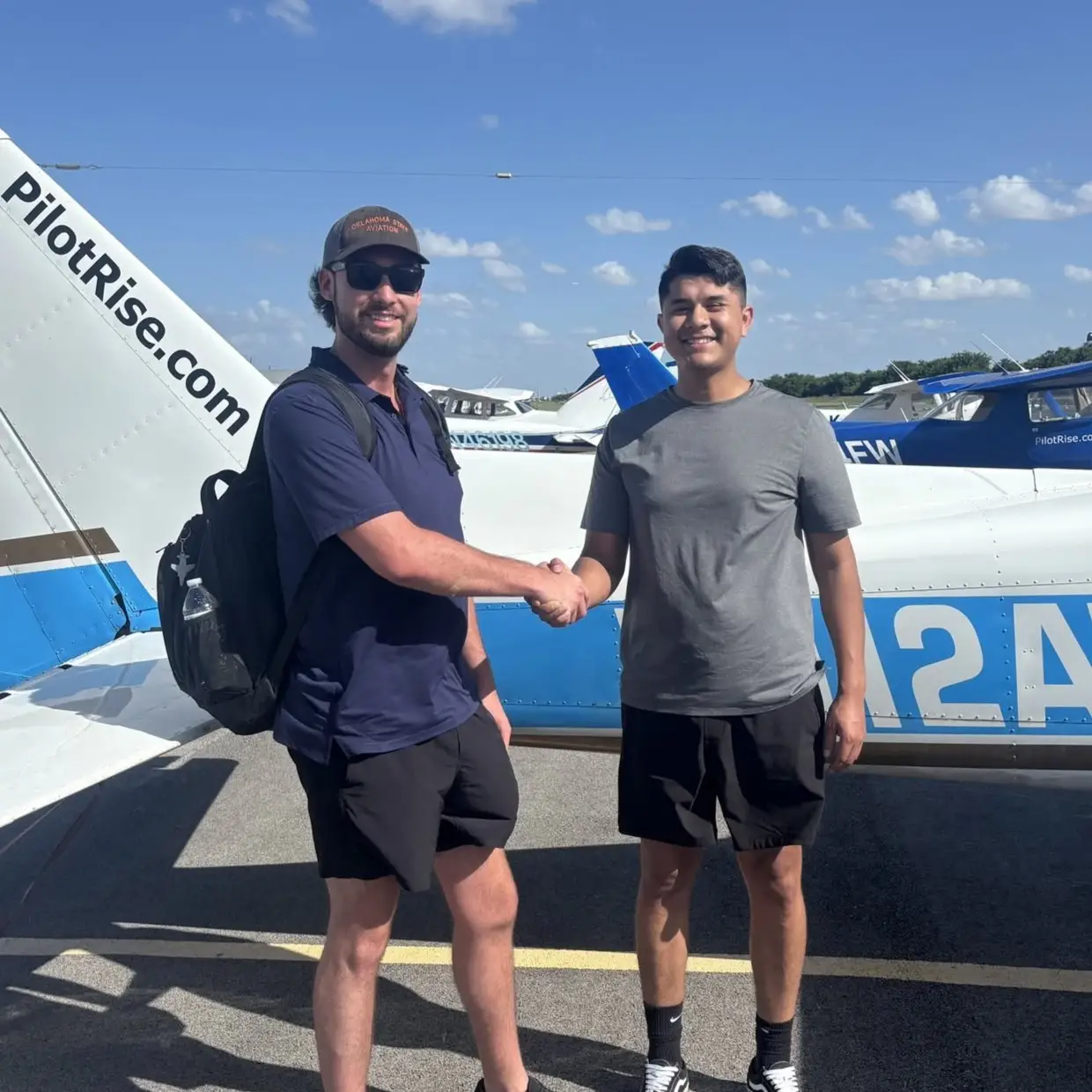
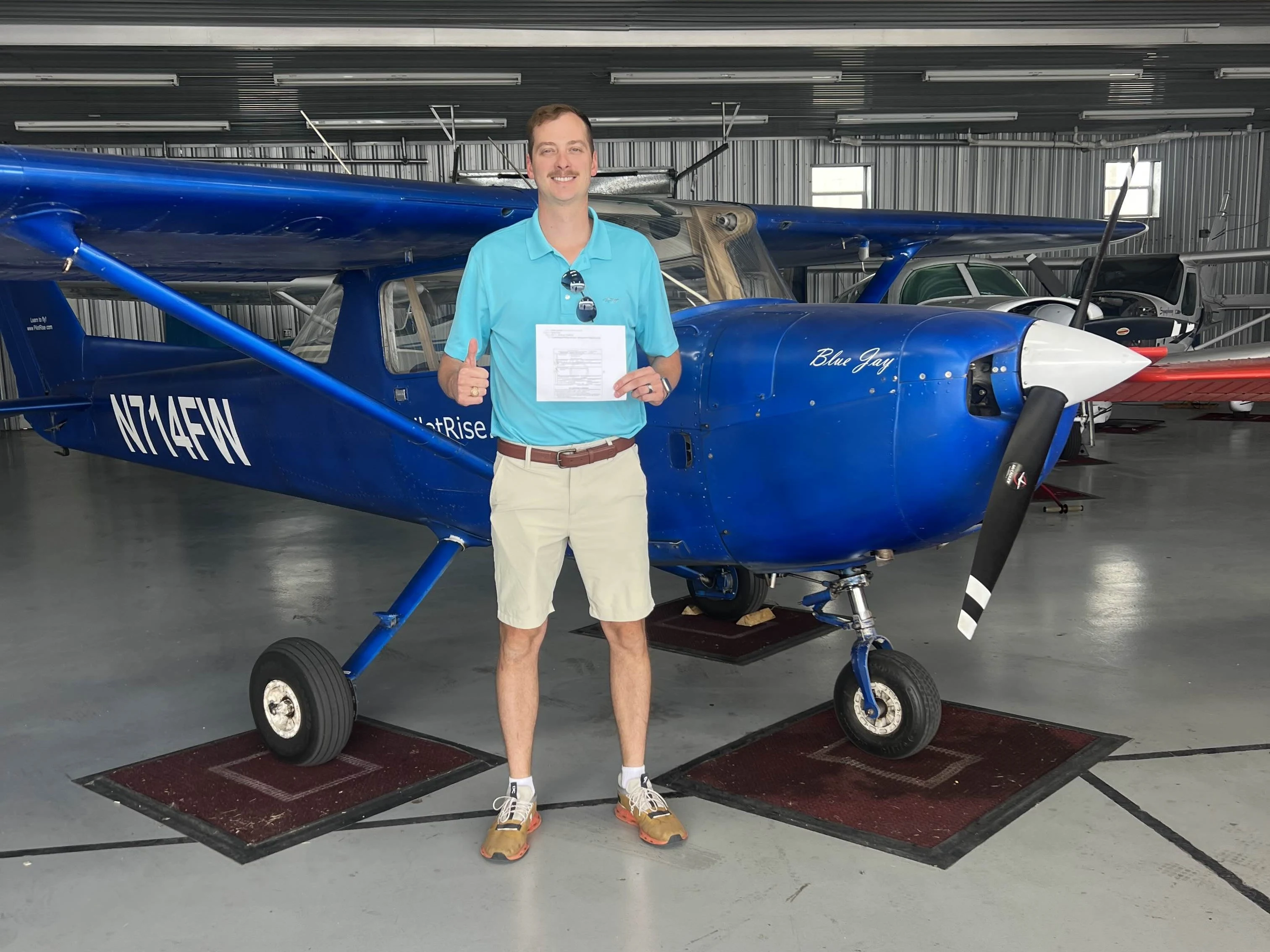
College Credit hero image with a Pilot Rise pilot holding a completed checkride certificate in front of a blue Cessna

Earn College Credit for Your Pilot Certificates

Complete your FAA certificates through structured Part 61 training at Pilot Rise, then have eligible credentials evaluated by universities that offer online aviation degrees. This route can reduce duplicated training, lower the academic cost of a degree, and let you begin building professional flight time sooner.

Beyond FAA MinimumsPersonalized TrainingFlexible SchedulingFinancing Available
Beyond FAA MinimumsPersonalized Training
Flexible SchedulingFinancing Available

The Practical Answer

You do not have to choose between focused flight training and a college degree.

Several universities currently award academic credit for eligible FAA pilot certificates and ratings. That means you can complete Private Pilot, Instrument, Commercial, CFI, CFII, and multi-engine training through a structured flight school, then submit those credentials to a university for credit.

Train First. Transfer Smart.

A four-step route from first flight to degree completion.

  1. Earn your FAA certificates

    Complete Private Pilot, Instrument Rating, Commercial Pilot, CFI, and CFII through a structured Part 61 program. Add multi-engine training at the point where it makes financial and career sense.

  2. Complete general education affordably

    Use a community college, approved online courses, prior college credit, military credit, or another transfer-friendly option for general education requirements. Confirm every course with the university you expect to attend before enrolling.

  3. Submit both sets of credentials

    Send the university your official college transcripts and FAA certificates. The university then determines which academic and aviation requirements your previous work satisfies.

  4. Finish the degree while building flight time

    Complete the remaining classes online while working as a flight instructor or in another aviation job. Instead of waiting until graduation to begin building professional experience, the two tracks can move forward together.

What May Transfer

FAA credentials universities commonly evaluate for credit.

Private Pilot Certificate

The foundation for every advanced pilot path. Some universities award credit for private-pilot ground and flight coursework.

Instrument Rating

May satisfy instrument ground, simulator, and flight-course requirements, depending on the university’s current policy.

Commercial Pilot Certificate

Often carries one of the largest groups of aviation-course equivalents because it builds on Private and Instrument training.

May satisfy a multi-engine ground or flight course and can increase the credit available in some professional-flight degrees.

Instrument Flight Instructor

CFII may add instrument-instructor coursework to the evaluation and can increase the total degree credit available.

Credit is never automatic. The receiving university must verify the certificate, eliminate duplicate course matches, and apply the credit to a specific degree plan.

Ready to Start?

Map your certificate path before you choose a degree.

Get a practical training sequence, timeline, and starting point for your flight experience and career goal.

Multi-Engine Add-On

Why we don't offer it—yet

Pilot Rise will be adding a multi-engine training program, with a goal of launching by the end of 2026. Until then, we recommend completing your multi-engine training at a school that specializes in it.

That recommendation is intentional—not a limitation.

A multi-engine airplane is one of the most expensive aircraft a flight school can operate. Unless it flies almost continuously, the operating costs are spread across very few students, driving hourly rates significantly higher. Many schools add a single multi-engine aircraft simply to offer a "complete" fleet, but that doesn't always provide the best value for students.

Specialized multi-engine schools benefit from economies of scale. Their aircraft fly constantly, instructors teach the same curriculum every day, and the cost per student is often dramatically lower. When Pilot Rise founder Michael Forseth earned his multi-engine rating, it was actually cheaper and faster to fly to Connecticut, train for four days, complete the checkride, and return home than to use a traditional local option.

The good news is this doesn't slow your airline path. Most career pilots complete Discovery Flight, Private Pilot, Instrument Rating, Commercial, CFI, and CFI-I first, then spend a year or more building paid flight time as an instructor. The multi-engine add-on typically comes much later—often when you're approaching airline hiring minimums and need to build your required multi-engine time.

Our focus is getting you to the airlines as efficiently and affordably as possible. That means recommending the best option for each stage of your training—not simply offering every service before it makes financial sense. As our multi-engine program grows, we'll bring that same value-focused approach to Pilot Rise.

Why Students Consider This Route

Separate the flying from the degree, then make both parts work harder.

Move through certificates at a training pace, not a semester pace

A traditional university may spread flight courses across several academic terms. At Pilot Rise, a full-time, prepared student can pursue the core professional certificates on an accelerated schedule, while flexible students can train around work or family obligations.

Begin building paid flight time sooner

Once you earn the instructor credentials and meet an employer’s hiring standards, you can begin working as a CFI while completing online college courses. That can put career experience and degree progress on the same timeline.

Avoid paying twice for the same learning

When a university accepts your FAA credentials, you may not need to repeat the corresponding flight labs or aviation courses. This can reduce tuition and duplicated training, although every evaluation is different.

Keep more control over location and cost

You can compare local aircraft, instructors, schedules, and hourly rates instead of being locked into one university fleet. You may also complete transferable general education courses closer to home before paying upper-division university tuition.

Preserve the ability to change direction

A modular route makes it easier to adjust pace, change schools, pause college, add a different major, or continue building hours without abandoning an all-in-one four-year program.

Current Programs to Compare

Universities that publish credit pathways for FAA pilot credentials.

Online university pathways that may award credit for FAA pilot credentials
UniversityOnline optionPublished approachWhy compare it
Liberty UniversityReview Liberty Experience Plus AviationBachelor of Science in Aviation and other online aeronautics programsExperience Plus lists specific course credit for FAA certificates and ratings. Liberty states that qualifying pilots may receive up to 45 college credits and complete remaining courses online.Strong fit for pilots who already hold several certificates and want an aviation degree-completion route.
Utah Valley UniversityReview UVU Online AviationOnline aviation programs, including Professional Pilot and Aviation Management pathsUVU allows online students to use a local flight school and evaluates previously earned FAA certificates required by its curriculum.Public-university option with established online aviation coursework and local-flight-school flexibility.
Purdue GlobalReview Purdue Global FAA CreditBachelor of Science in Professional FlightPurdue Global publishes FAA certificate-to-course matches and states that eligible industry credentials may provide up to 45 quarter credits.The nonflight curriculum is online and the program explicitly recognizes several professional pilot credentials.
Embry-Riddle Aeronautical University WorldwideBachelor of Science in Pilot OperationsEligible commercial/instrument pilots with specified added ratings, or multi-engine ATP holders, may transfer up to 45 credits into the 120-credit program.Aviation-focused online degree designed for already licensed pilots.
Thomas Edison State UniversityBachelor of Science in Aviation Flight TechnologyTESU has published FAA-certificate credit guidance for commercial and instrument-rated pilots and states that qualifying pilots may receive substantial credit.Transfer-oriented degree-completion institution for adult and working students.

Programs, tuition, transfer policies, residency rules, and degree requirements can change. Contact each university directly and request a written degree evaluation. Pilot Rise is not affiliated with or endorsed by the universities listed unless a separate written partnership is expressly announced.

Ready to Compare Your Route?

Build the flight-training side of your college plan.

Tell us where you are starting, how quickly you want to train, and what kind of degree path you are considering. We will help you compare the training sequence, pace, and next steps.

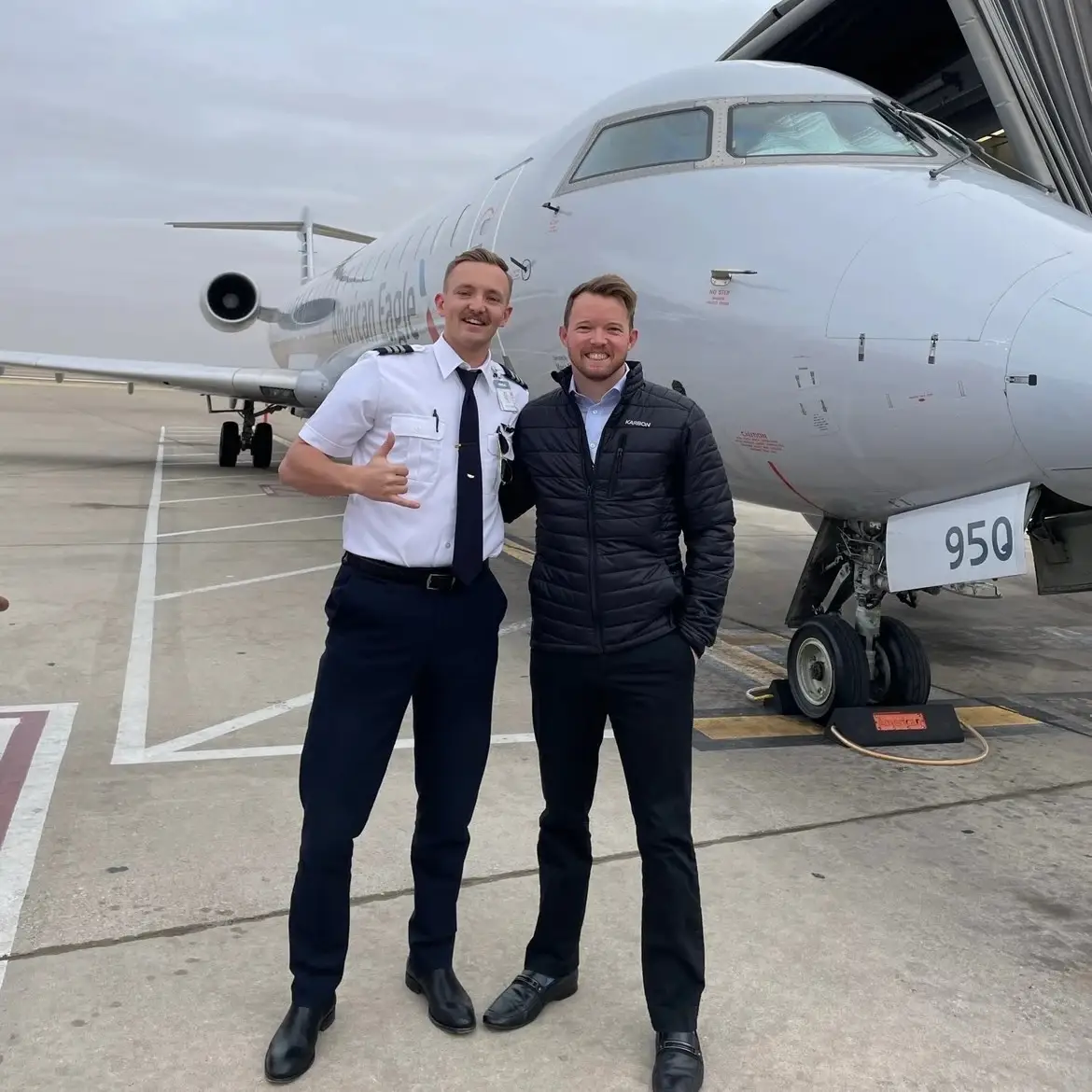
Michael Forseth, founder of Pilot Rise, in the cockpit of a CRJ-700

A Route Our Founder Actually Used

How Michael Forseth combined Part 61 flight training, community college, and an online aviation degree.

Pilot Rise founder Michael Forseth did not begin with a four-year collegiate flight program. He completed his Private Pilot, Instrument Rating, Commercial Pilot, CFI, CFII, and multi-engine training under Part 61.

He then used Tarrant County College and online coursework to complete much of the general education normally included in the first two years of a bachelor’s degree. After earning his flight credentials, he transferred his college coursework and FAA certificates to Liberty University and completed the remaining requirements for an online Bachelor of Science in Aviation.

Michael estimates that the academic portion of his degree cost approximately $22,000, separate from his flight training.

Under Liberty’s current published Experience Plus table, the same general credential set Michael held - Commercial Multi-Engine, CFI, and CFII - maps to approximately 44 semester credits before any community-college transfer credit, subject to Liberty’s official evaluation.

The route let him concentrate on becoming employable as a pilot, continue his education without relocating, and ultimately complete the bachelor’s degree that supported his progression to an airline career.

Founder takeaway: The degree still mattered, but this route allowed Michael to avoid paying university tuition for every stage of flight training.

What Airlines Actually Evaluate

Airlines hire the complete pilot, not a school logo.

You do not need the largest flight school or the most famous aviation college to prove that you can succeed in airline training. A degree may still strengthen an application, and some major airlines currently list a bachelor’s degree as preferred. That is different from requiring a specific aviation school or a degree in aviation.

A large flight school or famous aviation college does not give you an advantage in getting hired by an airline. For most airlines, meaningful service—such as volunteering at a soup kitchen—can be more valuable on a résumé than the name of the school where you trained. What matters is the complete applicant: preparation, experience, record, judgment, professionalism, and how you work with other people.

See the six steps to become an airline pilot for the broader career sequence.

Competitive pilot applicants are commonly evaluated on factors such as:

  • FAA certificates, ratings, and medical eligibility
  • Total flight time and the quality, recency, and complexity of that experience
  • Training, checkride, safety, and employment history
  • Recommendations and professional references
  • Aptitude, personality, and other hiring assessments
  • Interview performance and technical preparation
  • Communication, judgment, professionalism, and customer service
  • The ability to work well with crewmembers, instructors, dispatchers, and passengers

A Different Use of Four Years

Start the career first, then let the degree progress beside it.

  1. Phase 1

    Become employable as a pilot

    Pilot Rise’s accelerated Career Pilot path is designed around roughly 9 to 12 months for a prepared, full-time student to complete the core certificate sequence. Weather, maintenance, proficiency, checkride availability, finances, and individual readiness can extend any timeline.

  2. Phase 2

    Build hours and finish classes

    After CFI and CFII, many pilots work as instructors to build professional experience. Online college courses can continue during this stage instead of delaying time building until after a four-year graduation.

  3. Phase 3

    Reach airline qualifications

    A highly consistent student may be able to complete training, build experience, and approach airline hiring minimums within roughly three years of starting. This is possible, not promised. Most civilian pilots following the unrestricted ATP route still plan around 1,500 total flight hours and all other current airline requirements.

Choose What the Degree Should Do for You

An aviation degree is efficient. A different degree may be a stronger backup.

An aviation degree often accepts the most credit for FAA certificates, which can make it the fastest degree-completion choice. It can also support careers in training, safety, management, and other aviation roles.

A degree or skill outside aviation may provide a broader fallback if a medical issue or industry disruption interrupts flying. The tradeoff is that a non-aviation degree may accept FAA certificates only as electives, or may not accept them at all.

Our practical recommendation is to decide what matters most:

  • Maximum transfer efficiency: Compare aviation degree-completion programs.
  • A separate backup career: Consider a non-aviation degree, trade, business capability, or technical skill.
  • Fastest route to paid flying: Prioritize consistent flight training, then add college at a workload you can sustain.

The backup plan does not have to come first. Many pilots complete online coursework, learn a second skill, or build a side business while instructing, on days off, or later in an airline career. Schedules vary, especially early in a career, so treat that flexibility as an opportunity rather than a guarantee.

Detailed Planning Questions

Questions to answer before choosing a college-credit path.

How much college credit will my pilot certificates receive?

There is no universal conversion table. The university reviews the exact certificate level, category and class ratings, degree program, duplicate course matches, previous transcripts, transfer maximum, residency requirement, and current catalog. Ask for a written degree audit showing where every credit applies. A large transfer total is less useful if most credits become electives that do not reduce the classes needed to graduate.

Can I use a community college for the first two years?

Often, yes. Community college can be an efficient way to complete general education and lower-division requirements. Choose the target university first, then use its transfer guide and an advisor to select courses. Tarrant County College states that its transfer staff can help students plan coursework for bachelor’s programs, but the receiving university controls final acceptance.

Should I earn an aviation degree or study something else?

An aviation degree usually makes the best use of FAA certificate credit and can be the quickest bachelor’s route. A non-aviation degree or technical skill may provide a stronger backup career if flying is interrupted. Either can be reasonable. Choose based on transfer efficiency, cost, interest, and the kind of fallback you actually would use.

What if I lose my FAA medical later?

Build financial and professional resilience over time. That may include another degree, trade, business skill, savings, and appropriate insurance. Airlines often provide or offer disability benefits, and some pilots purchase supplemental coverage, but benefits vary by employer, union agreement, policy definitions, waiting periods, exclusions, offsets, taxes, and duration. Read the actual plan documents instead of assuming a certain percentage or coverage through retirement.

Can I work while completing flight training or college?

Yes, but workload matters. Pilot Rise offers flexible and accelerated schedules. A student working full time may need a longer training timeline, while a full-time flight student should avoid overloading college courses during the most demanding phases. Once instructing, online courses can be scheduled around flying, weather, and student demand.

Do airlines care where I attended flight school or college?

Airlines may consider a degree, and current preferences vary by carrier. They do not hire solely because an applicant attended a famous flight school. Certificates, flight experience, record, recency, recommendations, assessments, interviews, technical ability, judgment, communication, and professionalism all matter. Always review each airline’s current published requirements before applying.

Can financial aid or a 529 plan cover this route?

Financial aid depends on the university’s program and eligible charges. Yes, eligible flight-training expenses may now be covered by a 529 plan under expanded federal rules for postsecondary credentialing programs. Confirm documentation and withdrawal requirements with your plan administrator, then see Pilot Rise’s separate 529 Plans for Flight Training page for a focused explanation.

Is This the Right Route?

This path is strongest for students who want flexibility, speed, and control.

It may be a strong fit when you:

  • Want to complete certificates faster than a semester-based flight sequence
  • Need to stay in Dallas-Fort Worth or continue working
  • Want to begin instructing and building hours before finishing college
  • Already have college credit or plan to use community college
  • Are comfortable planning around the unrestricted ATP unless told otherwise in writing
  • Want to compare several universities instead of being locked into one program

A traditional collegiate flight program may be a better fit when campus life is a major priority, financial aid requires an integrated program, military or veteran benefits favor a particular structure, or a verified R-ATP pathway outweighs the additional time and cost for your situation.

Build the Flight Side of Your Plan

Become employable as a pilot, then make your credentials count twice.

Tell us your current flight experience, previous college credit, weekly availability, and career goal. Pilot Rise will help you map the training sequence, pace, aircraft options, and realistic milestones while you compare degree programs directly with their universities.

Contact Us
Contact Us security verification

By submitting, you agree to receive reservation and update texts from Pilot Rise. Msg & data rates may apply. Reply STOP to opt out. See our Privacy Policy. No spam. We will never sell your information.

Book Flight

SCHEDULE INTRO FLIGHT - $150

Hands-on 30-minute intro flight. Discover what flying is like.

Book online — No card required.

Book flight security verification

By submitting, you agree to receive reservation and update texts from Pilot Rise. Msg & data rates may apply. Reply STOP to opt out. See our Privacy Policy. We will not send marketing texts.

Select Aircraft

Free Flight Training Guide

Step 1 of 333%

What's your first name?

Contact Us

Contact Us
Contact Us security verification

By submitting, you agree to receive reservation and update texts from Pilot Rise. Msg & data rates may apply. Reply STOP to opt out. See our Privacy Policy. No spam. We will never sell your information.