Preparation and Practice
Students who study, chair fly, and practice between lessons usually progress faster. Active Pilot Rise students also get free simulator access, making it easier to practice without paying for aircraft time.
2026 DFW Flight Training Cost Guide
A comprehensive, honest breakdown of what it costs to become a pilot in Dallas-Fort Worth, from your first Discovery Flight through Private Pilot, Instrument, Commercial, CFI, CFII, and the airline pathway. See current 2026 prices, realistic training ranges, and the factors that determine what you’ll actually spend.
Prices reflect 2026 Pilot Rise rates at Hicks Airfield (T67) and Dallas Executive Airport (KRBD).
AOPA Distinguished Flight School, 2025 and 2026A 30-minute hands-on flight with a CFI that can be logged toward private training.
The first certificate for personal flying and every advanced training path.
Train for instrument procedures, approaches, and lower-visibility operations.
Prepare for commercial privileges after Private, Instrument, and the required experience.
Learn to teach from the right seat and begin a common paid time-building path.
Add instrument-instructor privileges and prepare to teach instrument students.
Private, Instrument, Commercial, CFI, and CFII training from zero experience.
Estimates include aircraft, instruction, checkrides, and supplies. Actual costs vary by student. See current hourly rates.
Free intro flight with final financing approval. No commitment required.
Students who study, chair fly, and practice between lessons usually progress faster. Active Pilot Rise students also get free simulator access, making it easier to practice without paying for aircraft time.
Consistency matters. Flying regularly helps skills stay sharp and reduces time spent relearning between lessons, often lowering the total cost of training.
Aircraft rental is a major part of training cost. We carefully balance affordability with quality, equipping our Cessnas with modern avionics while keeping rental rates as accessible as possible.
Pilot Rise combines the flexibility and affordability of Part 61 with a structured syllabus, training records, stage checks, and standardized instruction. Training can adapt to your progress and schedule without sacrificing organization or momentum.
Simulator time lets you practice procedures and build repetition without paying for an airplane. Active Pilot Rise students can use our BATDs free, with instructor time billed only when an instructor is needed.
Most DFW checkrides cost about $800 - $1,000. FAA knowledge tests are scheduled through PSI, with testing centers widely available and the standard test currently about $175.
The lowest hourly rate does not always produce the lowest total cost. We focus on reducing unnecessary aircraft time, repeated lessons, and avoidable training expenses while keeping training structured.
01
Eligible active students can use our FAA-approved BATDs without an aircraft rental charge. Practice procedures, flows, radio work, emergencies, and instrument skills before paying to repeat them in an airplane.
02
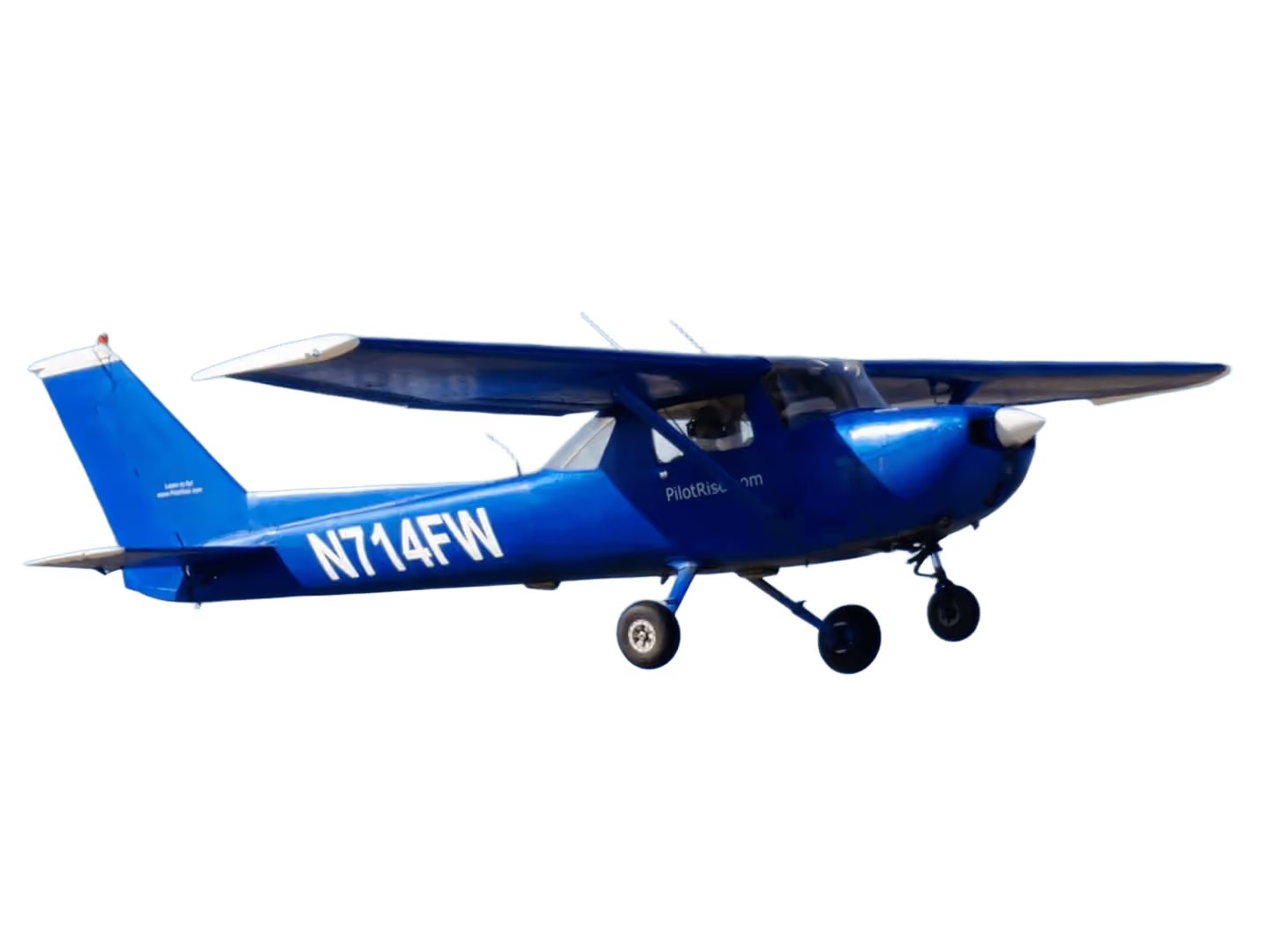
Our Cessna 150s provide a lower-cost option for many training flights, while our Cessna 172s offer additional room, payload, and capability when needed. Both are equipped with modern avionics, so choosing the less expensive aircraft does not mean training with outdated equipment.
03
Pilot Rise combines a structured syllabus, stage checks, standardized instruction, and detailed training records with the flexibility of Part 61. Lessons can adapt to your progress instead of forcing every student through the exact same sequence or pace.
04
Our training system tracks individual skills, knowledge areas, and recent performance across instructors and locations. Your next instructor can see what you have mastered and what needs work instead of spending paid flight time rebuilding the picture.
05
Career pilots eventually need significant flight experience. When appropriate, our planning can use lower-cost aircraft and eligible shared time-building to reduce the aircraft cost of reaching Commercial flight-time requirements.
06
Normal Pilot Rise training does not require a large prepaid package or non-refundable block of flight hours. Pay as you train, see our published aircraft and instructor rates, and keep control of your training funds.
You don’t pay for the airline pilot pathway all at once. Training happens in stages, allowing you to plan and budget as you progress from your first flight toward ATP eligibility.
Pay as you go or finance one certificate, multiple ratings, or a full career path. Pilot Rise works with aviation lenders and accepts other eligible funding sources.
Pay lesson by lesson with no large upfront payment, prepaid training package, or long-term training contract. Keep control of your money and avoid loan interest.
Compare flight training financingFinance a structured career-pilot training path from zero experience through CFI and CFII. Approval, rates, payment timing, and loan terms are set by Stratus.
Explore Stratus financingFinance one certificate, multiple certificates, or even finish a rating already in progress. A flexible option for students who want to fund training stage by stage.
Explore Flight Training FinanceAOPA offers an unsecured flight-training line of credit that can be used for pilot certificates and ratings. AOPA membership and lender approval are required.
View AOPA flight training loansCertain expenses for eligible FAA pilot certificates and ratings may qualify under expanded 529 rules. Pilot Rise can provide training estimates, invoices, and other documentation.
See how 529 plans may applyPilot Rise accepts eligible third-party financing. Confirm permitted uses, disbursement requirements, fees, and repayment terms directly with your lender.
Ask about outside financingAt Pilot Rise, earning a Private Pilot Certificate typically costs about $8,500 - $14,500 in 2026. Career pilots continue through Instrument, Commercial, CFI, CFII, and usually Multi-Engine training, so the total depends on how far you plan to go.
A Private Pilot Certificate, commonly called a Private Pilot License or PPL, typically costs about $8,500 - $14,500 at Pilot Rise. Your final cost depends mostly on aircraft choice, preparation, training consistency, and how quickly you reach checkride proficiency.
At Pilot Rise, training from zero experience through Private Pilot, Instrument, Commercial, CFI, and CFII is roughly $36,000 - $53,500 based on current 2026 estimates. Multi-Engine training is typically another $3,500 - $7,000 when needed, followed by experience building toward ATP eligibility.
Flight training is proficiency-based, so students do not all finish in the same number of hours. Preparation, study habits, training frequency, aircraft choice, weather, and checkride readiness can all change the final cost.
The best way to lower the total cost is to avoid unnecessary aircraft time and repeated lessons. Study between flights, train consistently, use simulator practice, and choose a lower-cost aircraft when it fits the lesson.
Neither is automatically cheaper. Pilot Rise uses structured Part 61 training, combining a syllabus, stage checks, detailed records, and standardized instruction with greater flexibility around pace, schedule, aircraft, and student progress, which can make training more affordable and efficient.
Our estimates include aircraft rental, flight and ground instruction, checkride fees, and typical training supplies. They are planning ranges rather than fixed-price contracts because actual training needs vary by student.
No. Pilot Rise's normal training path is pay as you go, without requiring a large prepaid training balance or long-term training contract. Financing is also available for individual certificates, multiple ratings, or a full career-training path.
Tell us your goals, schedule, and budget. We’ll help you build a realistic training plan and choose the path, pace, and payment options that fit you.
5673 Apollo Dr. Dallas, TX 75237
628 Aviator Dr. Fort Worth, TX 76179