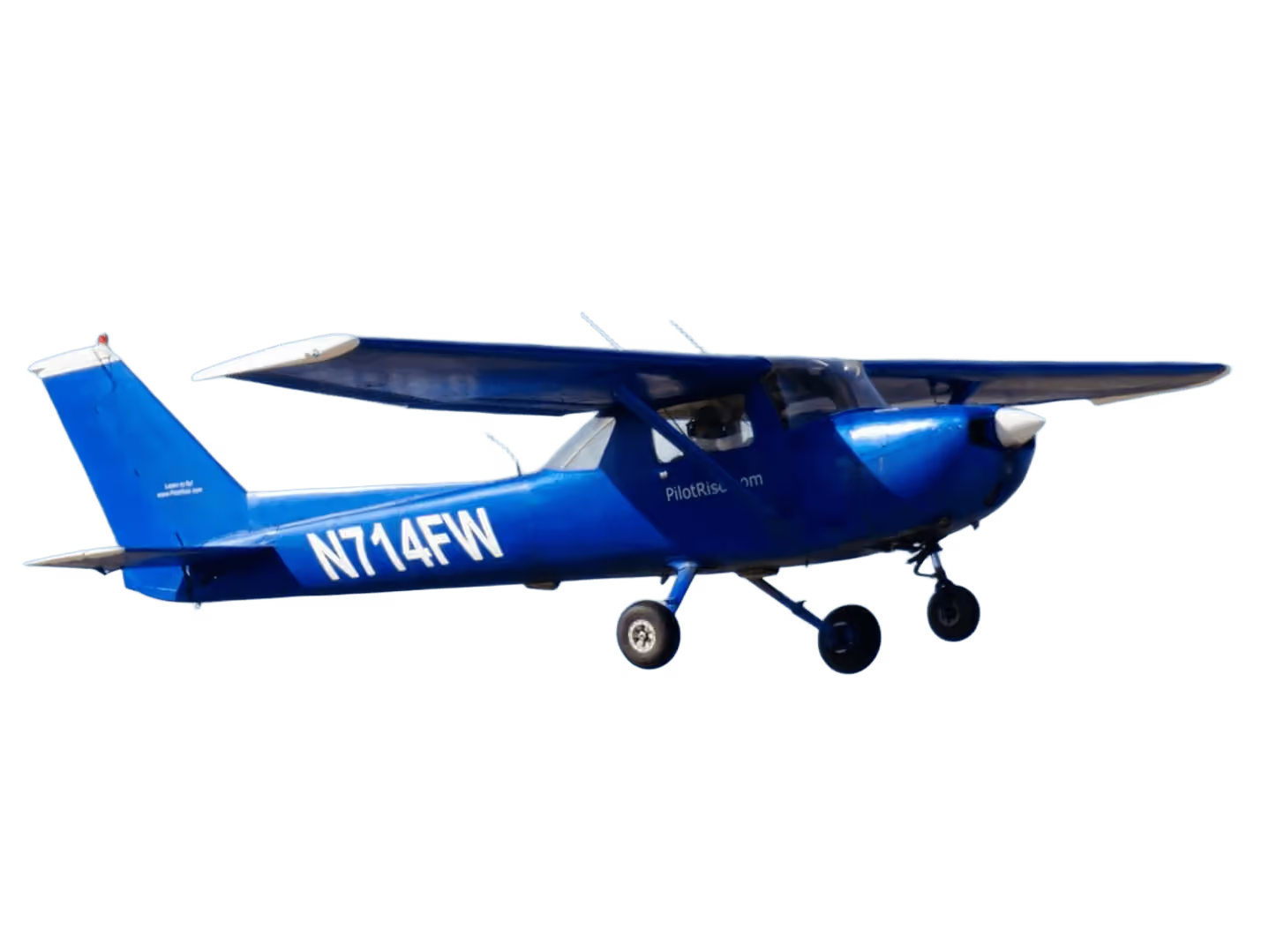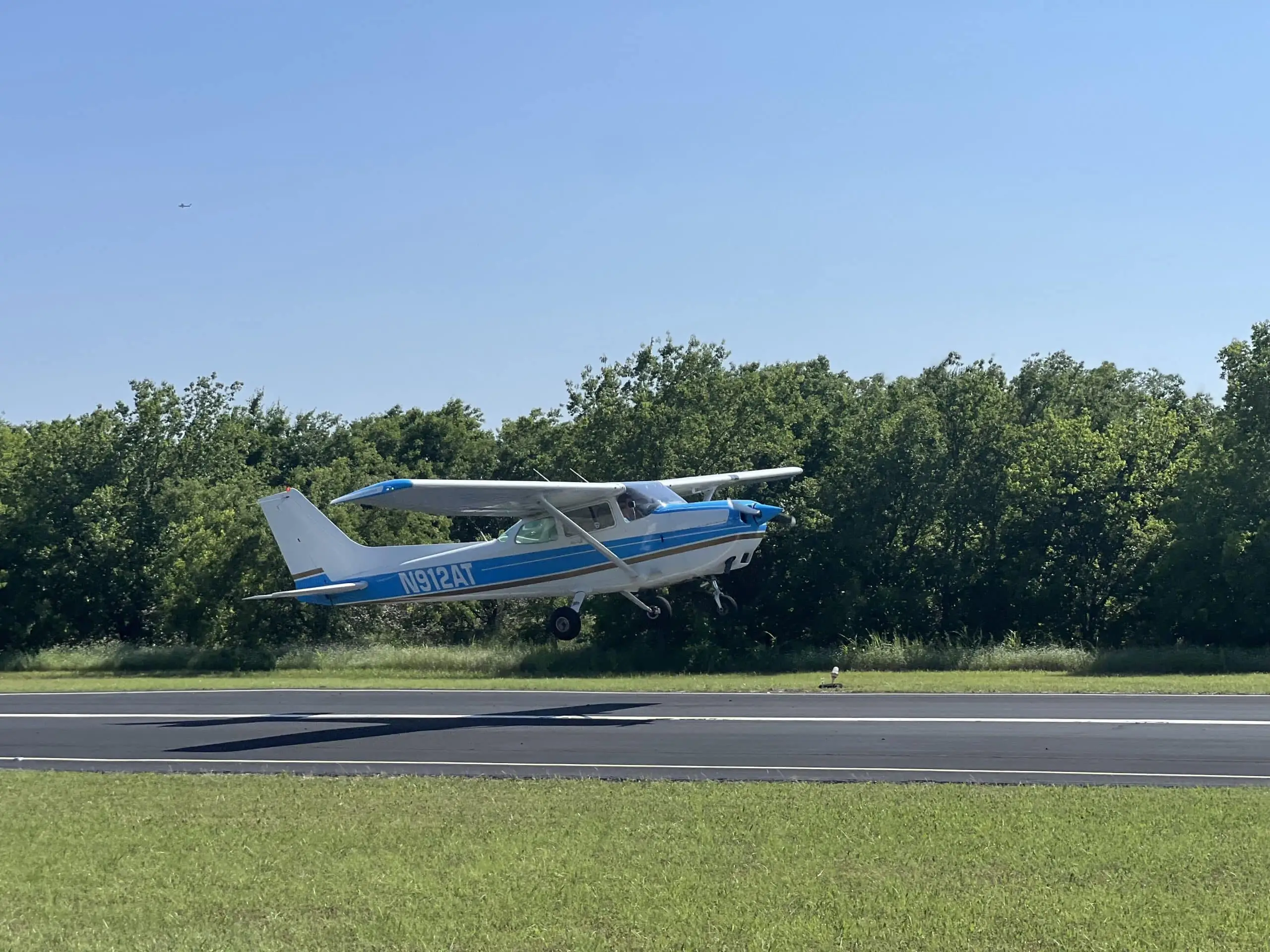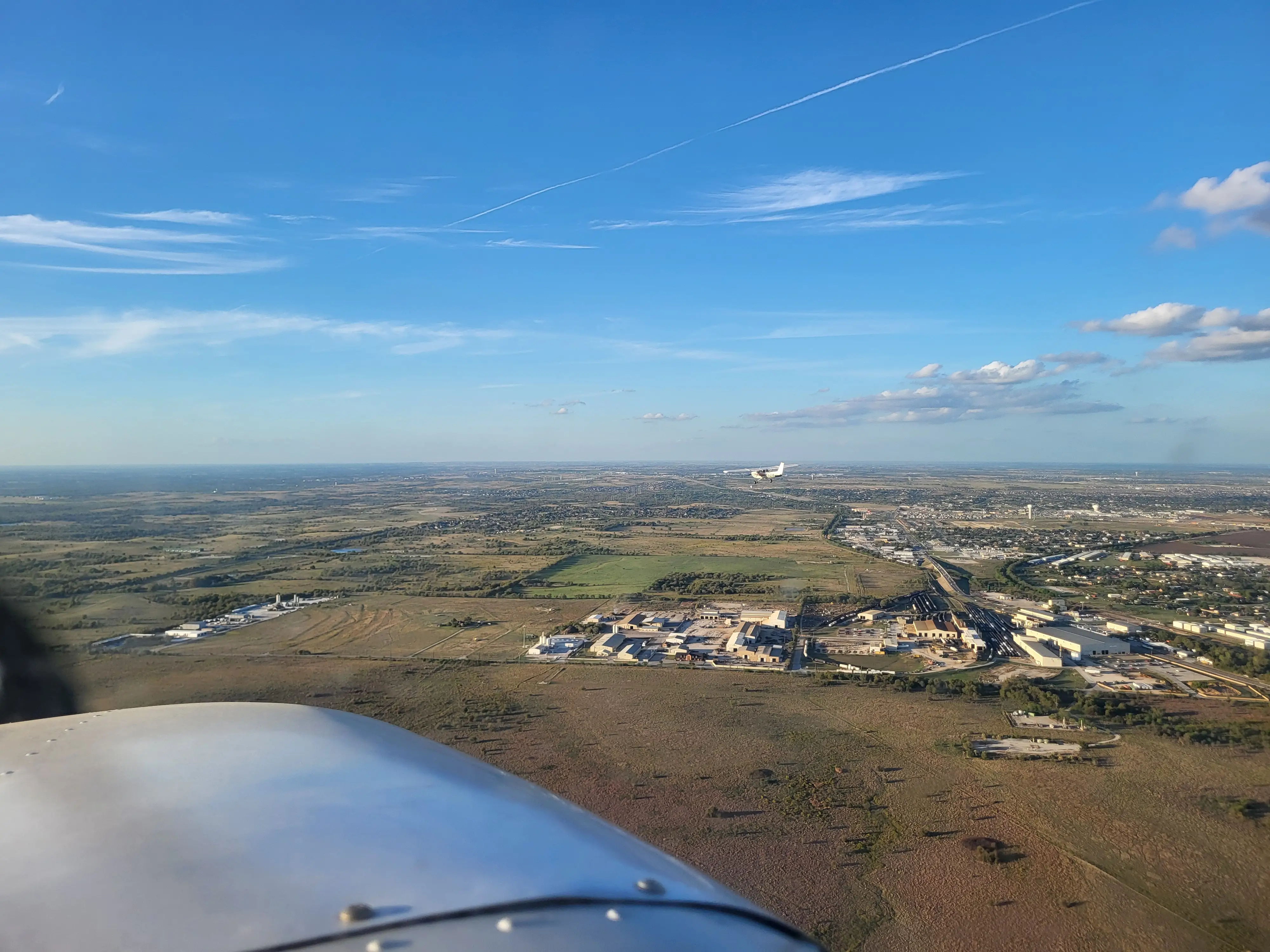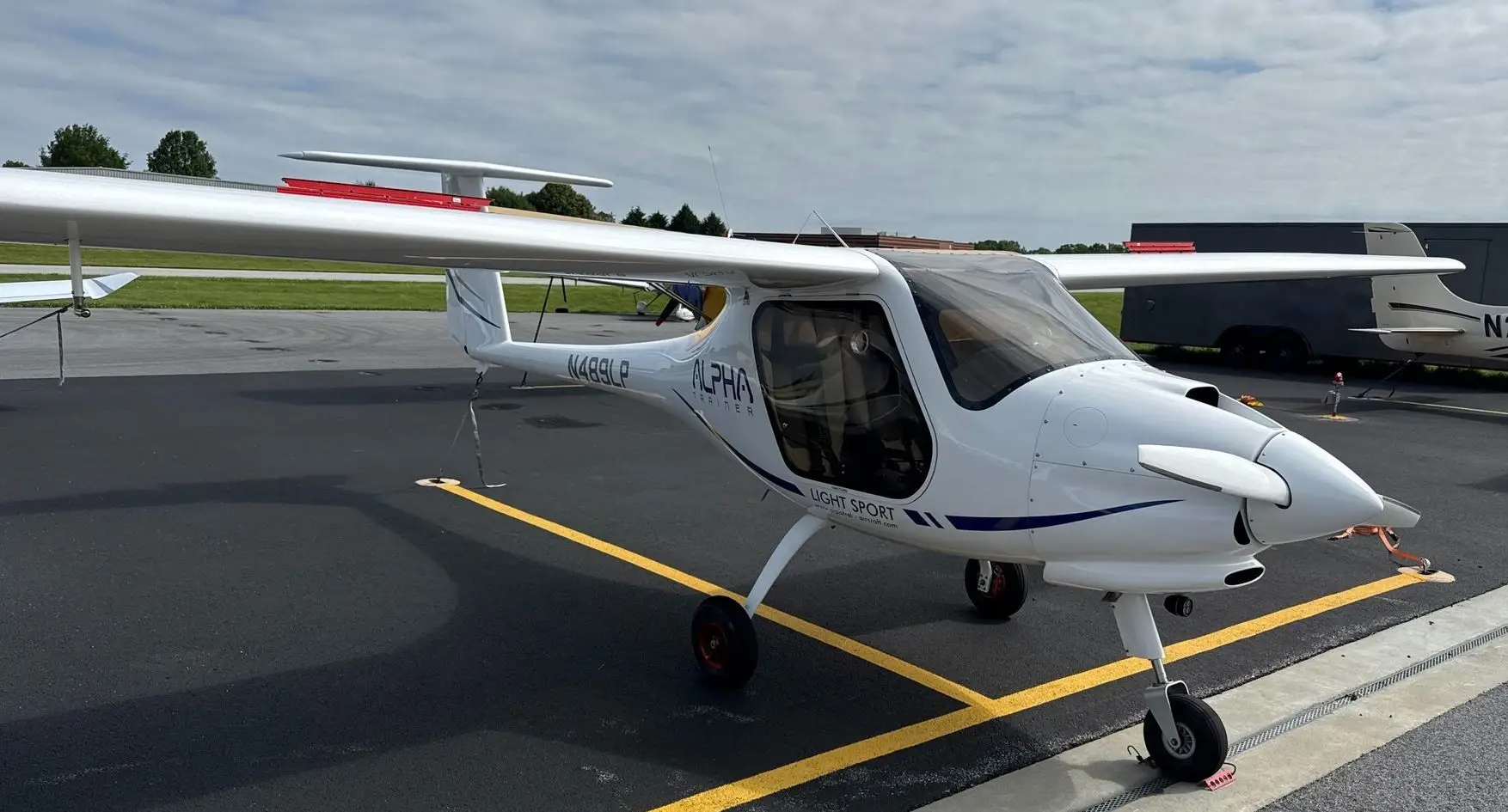
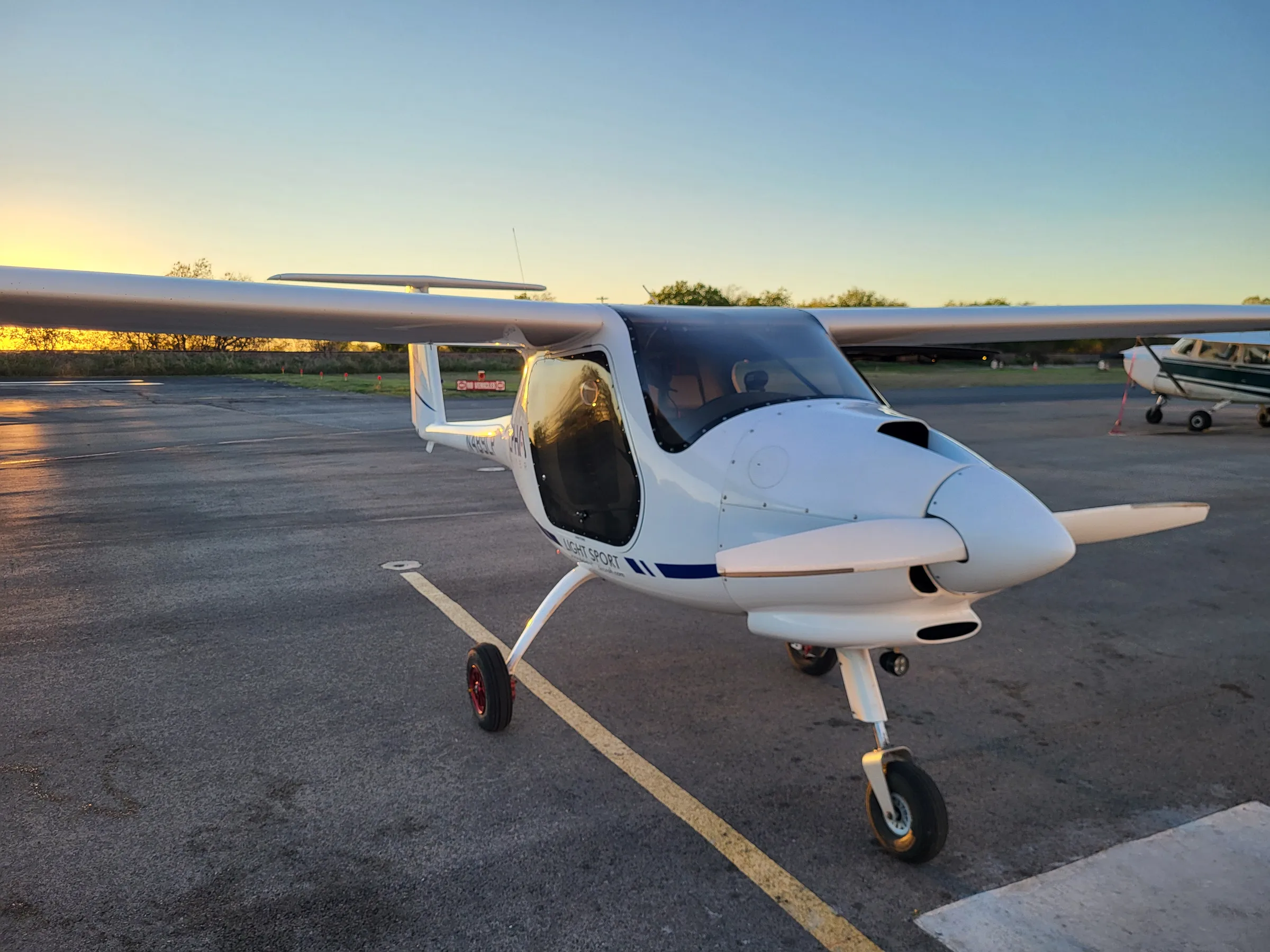
Park our Pipistrel Alpha Trainer next to a Cessna 172 and the first thing you notice is how small it is. Even the wheels look tiny. If you’re about to take your first flying lesson, we get why the bigger one might feel like the obvious choice.
We like flying the 172, too. Ask us what we’d put you in for your first lesson at Dallas Executive and we’ll usually point you toward the Alpha. You can feel what the airplane is doing through the stick, and there’s more strength under that smooth white finish than you might expect.
Compare the trainers at a glance
Whole-Aircraft ParachutePipistrel Alpha Trainer: AdvantageCessna 172: No advantage
The parachute is attached to the airplane, so the whole aircraft comes down under it with everyone still inside. It gives the pilot another option in a serious emergency.
Wider CabinPipistrel Alpha Trainer: AdvantageCessna 172: No advantage
The Alpha’s cabin is 44 inches wide, about 4½ inches wider than the 172N. That gives you and your instructor a little more elbow room.
Increased VisibilityPipistrel Alpha Trainer: AdvantageCessna 172: No advantage
The Alpha’s large clear doors let you see beside and below the airplane. That helps when you’re looking for traffic or keeping track of the runway as you turn.
Modern AvionicsPipistrel Alpha Trainer: AdvantageCessna 172: No advantage
The Alpha’s Garmin G3X Touch puts airspeed, altitude, and engine readings on one touchscreen. Only one of our 172s has a Garmin G500; the others use traditional six-pack layouts with Garmin G5 upgrades.
Modern AircraftPipistrel Alpha Trainer: AdvantageCessna 172: No advantage
Our Alpha was built in 2022 with a lightweight composite airframe and a cockpit designed around digital instruments. Most of our Cessna 172s were built in the 1960s and 1970s.
Stronger AirframePipistrel Alpha Trainer: AdvantageCessna 172: No advantage
The Alpha’s airframe is designed for 32% higher positive G loads than the normal-category 172N.
AffordabilityPipistrel Alpha Trainer: AdvantageCessna 172: No advantage
At Pilot Rise, the Alpha costs less per hour to rent than the 172 in this comparison. That difference adds up over a full course of training.
More Options in an EmergencyPipistrel Alpha Trainer: AdvantageCessna 172: No advantage
If the engine quits, the Alpha can glide farther from the same height. That can put more roads, fields, or runways within reach. The parachute adds another option if a safe landing looks doubtful.
Fly in IMCPipistrel Alpha Trainer: No advantageCessna 172: Advantage
IMC is weather that requires you to fly by instruments, such as clouds or low visibility. An equipped and approved 172 lets you train in actual clouds. In the Alpha, you can practice the same instrument skills while staying in visual conditions.
Bringing Bags or an ObserverPipistrel Alpha Trainer: No advantageCessna 172: Advantage
The 172 has rear seats, so someone can come along to observe a lesson when the loading allows. It also has more room for bags if you’re taking a trip.
Learn Energy ManagementPipistrel Alpha Trainer: AdvantageCessna 172: No advantage
With its efficient glide, the Alpha makes you plan your descent and speed early, building the energy management habits used in airliners. The 172 sheds height and speed more readily with reduced power and flaps.
Speed BrakesPipistrel Alpha Trainer: AdvantageCessna 172: No advantage
Like airliners, the Alpha has speed brakes to help manage its descent. A standard 172 doesn’t, so the Alpha introduces you to another type of flight control you’ll encounter in airline training.
Fuel EndurancePipistrel Alpha Trainer: 4h 10mCessna 172: 4h 10m
Endurance is how long you can stay in the air on the fuel you’re carrying. The two airplanes come out even here. When you plan a flight, account for your power setting and the fuel you want in reserve when you land.
RangePipistrel Alpha Trainer: 390 NMCessna 172: 425 NM
The 172 offers 425 NM of range versus the Alpha’s 390 NM. Most of our training flights stay within 75 NM, so that difference rarely matters during a lesson.
Fuel EfficiencyPipistrel Alpha Trainer: 35 NM / gallonCessna 172: 13 NM / gallon
In this comparison, the Alpha goes about 2.7 times as far on a gallon. For the same distance, it uses a little over a third as much fuel as the 172.
Stall SpeedPipistrel Alpha Trainer: 42 knotsCessna 172: 49 knots
A stall happens when the wing meets the airflow at too steep an angle. The Alpha’s lower figure means it can fly slower. Weight, flap position, and how hard you’re turning can all change the speed at which a stall occurs.
Cruise SpeedPipistrel Alpha Trainer: 105 KTASCessna 172: 115 KTAS
KTAS is your speed through the air, measured in nautical miles per hour. The 172’s extra speed is handy on a trip. It matters a lot less when you’re staying near the airport to practice takeoffs and landings or flight training.
Takeoff RollPipistrel Alpha Trainer: 800 ftCessna 172: 1,000 ft
The Alpha needs less runway to get airborne, leaving more runway ahead as an extra safety margin. It also gives you more options at airports with shorter runways.
Landing RollPipistrel Alpha Trainer: 410 ftCessna 172: 580 ft
The Alpha’s shorter landing roll leaves more runway to spare, adding a safety margin and giving you more airport options.
Energy at LandingPipistrel Alpha Trainer: 145 kJCessna 172: 460 kJ
These numbers show how much energy the airplane has to shed as it slows to a stop after touchdown. In this example, the Alpha has about a third as much to shed as the 172.
Built for higher G loads
The Alpha is designed for 32% higher positive G loads than the normal-category 172N: +7.5 vs. +5.7 G.
More room up front
The Alpha’s cabin is 44 inches wide, about 4½ inches wider than the 172N. That gives you and your instructor a little more elbow room.
Whole-aircraft parachute
Our Pipistrel Alpha Trainer carries a ballistic parachute that is attached to the airplane. It gives the pilot an additional emergency option.
Pipistrel's Excellent Glide Range
From 6,000 feet above Fort Worth Meacham, the Alpha’s published glide ratio gives about 14.8 NM of still-air reach. The 172N handbook chart gives about 9.0 NM. That extra distance gives you more potential landing areas to consider.
What you’ll notice in your first lesson
- Stick and airbrakes. Come in a little fast and the Alpha can float down the runway before touching down. You feel the difference when you get the speed right. Your instructor can also show you how the airbrakes help you manage the descent. Alpha Trainer handbook, landing
- Two ways to read the instruments. Our Pipistrel Alpha Trainer has a Garmin G3X display that supports six-pack-style round gauges or airspeed and altitude on moving scales. Your instructor can confirm the layouts available in the installed configuration. The GPS navigator and two-axis autopilot are there when you’re ready to learn them.
- A different view from the seat. If you’re coming from a 172, take a moment on the ground to see what the runway looks like from the Alpha. If you sit low, a cushion will greatly improve your sight picture.
Can the Alpha Trainer carry two adults?
Our Pipistrel Alpha Trainer has a useful load of 518 lb. It can carry a 190 lb instructor, a 240 lb student, and a 5 lb bag with full tanks.
Most Cessna 172s cannot carry four average-sized adults with full tanks.
The Alpha’s two-seat design fits a typical training flight: a student and instructor with full tanks, as in the example above.
When we’d put you in a 172
The 172 is our choice for actual instrument conditions when the aircraft is equipped and authorized, for flights with rear-seat passengers, or for pilots who want to get comfortable with a yoke and manual mixture.
If you’re deciding where to start, ask for the Alpha Trainer on your discovery flight. We’ll get you settled in the seat and give you a chance to fly it yourself.